
Song lyrics
Cold blood and repentance
Are my name and surname
I don’t know how it happened
But I’m here
To such an extreme
I never imagined
I’d come to say this about myself
I’m evil because I have so much time
But without you
The wicked are distinguished from the meek
Because they never have second thoughts
They always carry a map in their pocket
To reach the emergency exit
They know how to run quickly on the escape route
After every misdeed
Whenever they need it
They pull out their handbook of justifications
They never have moments of sadness
Only a few angry flashes
That they barely contain
But with their cold determination
They cover it with words or silence
Cold blood and repentance
Are my name and surname
I don’t know how it happened
But I’m here
To such an extreme
I never imagined
I’d come to say this about myself
I’m evil because I have so much time
But without you
The meek
The good person
Knows when they have been wicked
Knows sadness
That emotion that comes suddenly
Like a light, sharp pang
Which, combined with repentance,
Makes them bend
under the weight of their mistakes
And while waiting for forgiveness
Or reparation
They remember the people they have offended
And the lost opportunities for serenity
The meek person knows
what is inside their own soul
Cold blood and repentance
Are my name and surname
I don’t know how it happened
But I’m here
To such an extreme
I never imagined
I’d come to say this about myself
I’m evil because I have so much time
But without you
The meek person knows
The meek person knows
What’s inside his own soul
The wicked man has the map in his pocket
The wicked man has the map
To the emergency exit in his pocket
The meek person knows
What’s inside his own soul
The wicked man doesn’t know
Cold blood and repentance
Are my name and surname
I don’t know how it happened
But I’m here
To such an extreme
I never imagined
I’d come to say this about myself
I’m evil because I have so much time
But without you
I have so much time
But without you
I have so much time
But without you
I have so much time
But without you
I have so much time
But without you
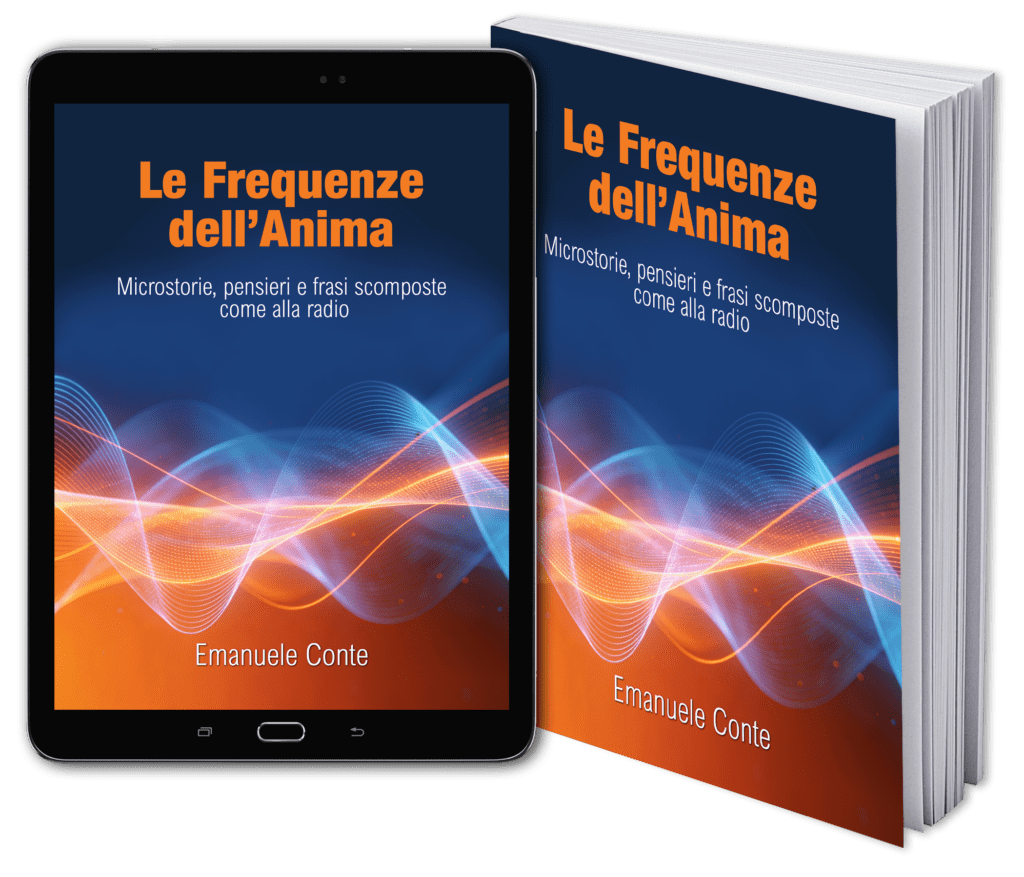
This song is the English version of the Italian track “Sangue freddo e pentimento,” taken from the book Le frequenze dell’anima by Emanuele Conte.
Rolling Lives Project
Lyric by Emanuele Conte
Production by KLASSPOP.IT
Sound by ECO Sound Design
Video: Podcastevolution.it
© ECRV 2026
Available in ebook and paperback at leading online bookstores – See list >>>
Discover all the channels where you can find this song
THE MEANING OF THE TEXT
“Cold Blood and Repentance” by Emanuele Conte: analysis of the song’s lyrics
The song “Cold Blood and Repentance” by Emanuele Conte is an intense and almost philosophical reflection on human nature, on the conflict between good and evil, and on the awareness of one’s own mistakes.
Through simple yet profound imagery, the song contrasts two opposite ways of living: that of the “evil” person, cold and rational, and that of the “gentle” person, capable of recognizing their mistakes and feeling remorse.
From the very first words, the protagonist introduces himself with a very strong sentence: “Cold blood and repentance are my first and last name.” This expression suggests that two contrasting dimensions coexist within him.
On one hand there is cold blood, a symbol of emotional detachment, clarity, and control; on the other hand there is repentance, the ability to look within oneself and acknowledge the weight of one’s actions.
It is as if the narrator were confessing that he has reached a point in his life where he is forced to confront a part of himself he had never imagined.
The text then introduces a very clear distinction between the evil person and the gentle one. In the song’s description, the evil person is someone who acts without second thoughts.
He is always ready to find a way out, both practically and morally: he has “in his pocket the map to reach the emergency exit” and carries with him “the handbook of justifications.” This image portrays someone who never truly takes responsibility for their actions.
He feels neither sadness nor remorse; at most he experiences bursts of anger, which he is still able to control with coldness. It is a figure who lives by defending himself from deeper emotions, covering them with words or with silence.
On the contrary, the gentle person is described as someone who knows sadness and can recognize when they have caused harm. In the song, sadness is not seen as a weakness but as a form of awareness.
It arrives suddenly, “like a light, sharp sting,” and together with repentance it forces the individual to bend under the weight of their own mistakes.
This passage is central because it suggests that true goodness does not consist in never making mistakes, but in being able to recognize them and seek forgiveness or repair.
One of the most significant lines is the one that says the gentle person “knows what lies within their own soul.” Here the true point of the song emerges: the difference between good and evil lies not only in actions, but above all in inner awareness.
The evil person may be lucid, organized, and even efficient, but he does not truly look inside himself. The gentle person, instead, possesses a deeper form of knowledge that comes through pain, remorse, and the memory of the people he has hurt.
The chorus repeats several times the idea of having reached “an exaggerated point,” as if the protagonist were facing a sudden realization.
The line “I am evil because I have so much time, but without you” also introduces another possible interpretation: the absence of someone important.
The emptiness left by this person seems to amplify the protagonist’s loneliness and forces him to confront himself. Free time, instead of being freedom, becomes a space where doubts, memories, and regrets emerge.
In the final part, the song reaffirms the central contrast: the gentle person knows what is inside their soul, while the evil person does not. It is an almost moral conclusion, but expressed with great delicacy.
The song does not judge in an aggressive way; rather, it invites reflection on the value of self-awareness and repentance.
Ultimately, “Cold Blood and Repentance” is a song about the inner struggle between detachment and conscience, between justification and responsibility.
The message that emerges is that true humanity does not lie in being perfect, but in the ability to look within oneself, recognize one’s shadows, and feel the desire to change.
Precisely in that moment of fragility – when one feels sadness and the weight of one’s mistakes – the most authentic part of the human soul is revealed.